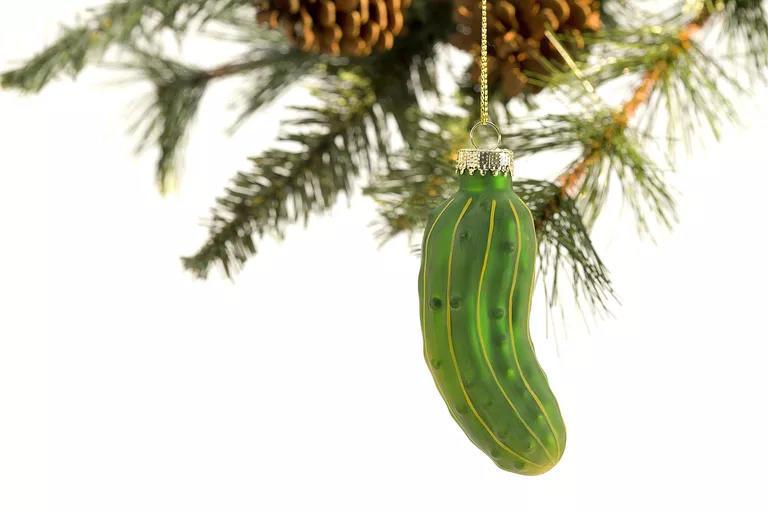
每年圣诞节,美国和英国的家庭都会在圣诞树上挂上新奇有趣的腌黄瓜状小饰品。
Every year, families across the US and the UK hang up quirky little pickle-shaped ornaments when it comes time to trim their Christmas trees.
很多英语国家的家庭都喜欢在圣诞树上挂腌黄瓜状装饰。据说这个传统来自德国,已经有几百年历史。
The practice is favored by many English-speaking families, and is thought to be a centuries-old tradition brought over from Germany.
人们把腌黄瓜形状的装饰品藏在圣诞树的树枝里,哪个孩子首先在圣诞节找出它,就可以最先拆开礼物,或者预示着来年运气爆棚。
The tradition involves hiding the pickle ornament among the branches, and rewarding the child who finds it with the chance to open gifts first — or, alternatively, that person simply gets good luck for the year.
但这个传统的起源却不太清楚。
The origin of the tradition, however, is a bit murky.
其实这个传统并非来自德国,因为大多数德国人并不会在圣诞树上挂腌黄瓜状饰品。
In fact, it doesn't seem to have actually originated in Germany at all, since most Germans don't practice it.
2016年《纽约时报》曾报道称,舆观调查网就圣诞树挂腌黄瓜状饰品的传统,向2057位德国人展开了调查。
A 2016 New York Times article pointed to a YouGov poll, in which 2,057 Germans were asked about the Christmas pickle.
调查发现,91%的受访者从没听说过这个传统。
The survey found that 91 percent had never even heard of it.
另一种说法是,这一传统并非源自德国,而是来自美国的一位德国移民。
Another theory is that the tradition of hanging a pickle didn't actually start in Germany, but with a German immigrant in the US.
根据2011年《坦帕湾》杂志的一篇报道,有一种说法是,1842年出生在德国巴伐利亚约翰-洛厄来到美国后生病了,当时正处于美国内战时期,他被囚禁在监狱里。
According to a 2011 edition of Tampa Bay magazine, one legend goes that a German man named John Lower, who was born in Bavaria in 1842, moved to the US and became ill when he was in prison during the Civil War.
他说服一名看守给了他一颗腌黄瓜作为最后的一餐,但他最终活了下来。在被释放后,为了纪念这颗腌黄瓜,他开始在家中过圣诞节时在圣诞树里藏一颗腌黄瓜给孩子们寻找,还说谁找到就会有和他一样的好运。
He convinced a guard to give him a pickle as a last meal, but he ended up surviving. After being released, he honored that pickle by starting his own family tradition of hiding a pickle in his Christmas tree for the kids — saying whoever found it would have the same good fortune he did.
当然,这个说法也未经证实,仅能作为解释圣诞树挂腌黄瓜状饰品这种传统的一个传说故事。
Of course, that story is also unconfirmed, and could just be a tale that popped up to explain the pickles later on.
根据《开阔的国家》报道,这一传统很可能是把德国的玻璃饰品卖到美国的一种销售策略。
According to Wide Open Country, the whole pickle game was most likely a marketing ploy to sell German glass ornaments to Americans.
据称,这一传统是伍尔沃斯公司创造出来的。在1880年,这家商店开始进口饰品。每件饰品都附带有一张卡片,讲述这个圣诞传统的故事。
It was said to be concocted by F.W. Woolworth when the store began importing the ornaments in 1880. Each one would come with a card that told the story of the tradition.
不管这个传统来自真实事件,还是被杜撰的,在圣诞树挂腌黄瓜状饰品已经非常流行。
Whether the tradition is real or manufactured, pickle ornaments have become quite ubiquitous.
尽管近年来开始流行在圣诞树上挂新奇的食物状饰品,比如形似牛油果吐司、辣酱、薄烤饼和拉面的装饰品,但在圣诞树挂腌黄瓜状饰品一直流传至今。
While whimsical foodie ornaments shaped like avocado toast, hot sauce, pancakes, and ramen have become popular in recent years, pickle ornaments aren't just a fad.