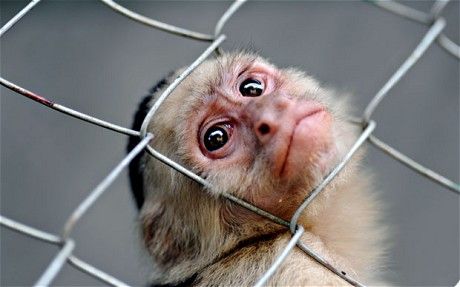
据一项最新研究发现,猴子的声道可以发出人类语言的声音,但是它们缺少一个会说话的大脑。
Monkeys have the vocal tracts to produce human speech sounds, but what they lack is a speech-ready brain, a new study has found.
这份研究由美国和欧洲的研究者们联合进行、发表在本周的美国杂志《科学进展》上,在猕猴发出声音、进食和做出面部表情时,他们使用X射线来观察它们嘴巴和喉咙内部。
The study, conducted by researchers from the U.S. and Europe and published this week in the U.S. journal Science Advances, used X-ray video to see within the mouth and throat of macaque monkeys induced to vocalize, eat food, or make facial expressions.
科学家们随后用这些数据建立了一个猴子声道的电脑模型,从而使得他们回答这一问题--“如果猴子长了人脑,那么它们的语言是什么样的?”
The scientists then used these data to build a computer model of a monkey vocal tract, allowing them to answer the question "what would monkey speech sound like, if a human brain were in control?"
结果表明,猴子可以轻松地发出许多不同的声音,足以产生上万个不同的词汇。
The results showed that monkeys could easily produce many different sounds, enough to produce thousands of distinct words.
举例来说,如果猕猴真的具有神经功能的语言能力,它们可以用自己的声道说出可理解的元音--甚至是完整的句子。
For example, monkeys could produce comprehensible vowel sounds -- and even full sentences -- with their vocal tracts if they had the neural ability to speak.
不过研究者们指出,虽然人类可以理解猕猴说的话,但是它们的声音却和人类不大一样。
The researchers noted, however, that while monkeys would be understandable to the human ear, they would not sound precisely like humans.
因此研究者们作出结论,之前的研究(很大程度上基于一只死亡猴子声道的石膏模型)低估了灵长类动物的发声能力,而人类语言能力进化需要的是神经的改变,而不是声道生理构造的改变。
Therefore, the researchers concluded that previous research -- largely based on plaster casts made from the vocal tracts of a monkey cadaver -- underestimates primate vocal abilities and that evolution of human speech capabilities required neural changes rather than an adaptation of vocal anatomy.
该项研究领导者之一、普林斯顿大学心理学教授阿西夫表示:“现在没人说猴子不能说话是因为声道生理构造和人类不同了--而是它们大脑里的东西和人类不同。”
"Now nobody can say that it's something about the vocal anatomy that keeps monkeys from being able to speak -- it has to be something in the brain," said Asif Ghazanfar, a professor of psychology at the Princeton University and one of the study leaders.