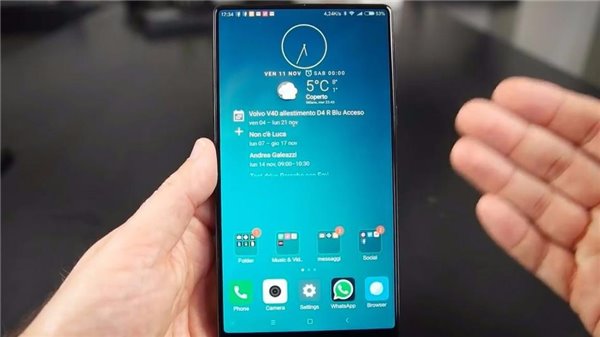
手指滑动的动作可能很快就可以为我们的手机充电了。
The movement of finger swipes may soon be able to charge our cellphones.
利用一种薄膜状装置,密歇根州立大学的研究人员发明了一种通过人体动作获取能量的新方法。实际上,这种装置被折叠后能产生更多的能量。
Researchers at Michigan State University have created a new way to harvest energy from human motion, using a film-like device that actually can be folded to create more power.
电气与电脑工程副教授、该项目领头研究人员尼尔逊·塞普尔韦达表示:“我们就要制成由人体运动供能的可携带设备了。
"We're on the path toward wearable devices powered by human motion," said Nelson Sepulveda, associate professor of electrical and computer engineering and lead investigator of the project.
该装置的名称是生物相容性铁电驻极体纳米发电器,简称FENG。
The device is called a biocompatible ferroelectret nanogenerator, or FENG.
当该装置被人体动作或机械能挤压时,就会产生电能。
When the device is compressed by human motion, or mechanical energy, electrical energy is created.
演示视频显示,利用这种纳米发电器,科学家们在未使用电池的情况下,仅靠简单的触碰和按压动作,成功运转了一个LCD触摸屏、一组20只的LED灯泡和一个可弯曲键盘。
Demonstration videos show that with the nanogenerator, the scientists successfully operated an LCD touch screen, a bank of 20 LED lights and a flexible keyboard, all with a simple touching or pressing motion and without the aid of a battery.
用来给LED灯泡发电的纳米发电器只有手掌大小,而用来给触摸屏发电的设备只有手指大小。
The nanogenerator used to power the LED lights was palm-sized, while the device used to power the touch screen was as small as a finger.
“在不久的将来,我预见人们整个星期都不用给手机充电了,因为电能在你的手指划动屏幕的时候,就已悄然生成。”塞普尔韦达在声明中说道。
"What I foresee, relatively soon, is the capability of not having to charge your cell phone for an entire week, because that energy will be produced by your movement," said Sepulveda in a statement.