道教与佛教的盛行
Prevail of Taoism and Buddhism
南北朝期间,尽管存在拆除毁坏,佛教仍然发展迅速。
During the Northern and Southern dynasties, since most emperors believed in it, Buddhism grew rapidly despite the demolition incidents.
当儒家思想的影响逐渐减弱时,佛教在中国被群众广为接受。
Buddhism found a receptive audience in China, while the influence of Confucianism waned.
北魏期间,帝王们是南北朝时期最慷慨的资助者。
During Northern Wei period, the rulers were the most generous patrons in both the north and south.
他们将佛教看作国教以加强自己的统治。
They took Buddhism as a nationwide religion in order to enforce his dominion.
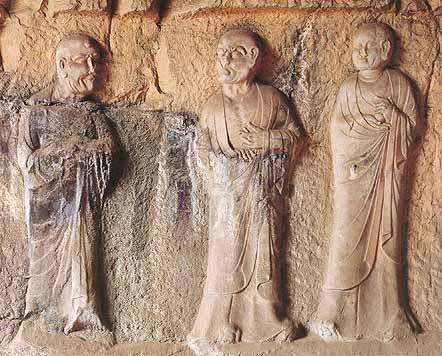
在北方,佛教石窟与僧人寺庙被大量建立。
In the north, large amounts of Buddhist caves and temples were built.
今天敦煌的莫高窟,大同的云冈石窟和洛阳的龙门石窟是佛教灿烂的历史中三大繁盛的中心地区。
Mogao Grottoes in today’s Dunhuang, Yungang Grottoes in Datong and Longmen Grottoes in Luoyang were three flourishing centers of Buddhist culture in its glory.
佛教修道院在那个时候也被迅速建立。
Buddhist monastic establishment grew rapidly at that time.
据传,到477年,北方出现了6478座寺庙和77528为僧人尼姑。
By 477 there were reportedly 6478 Buddhist temples and 77258 monks and nuns in the north.
据称南方在几十年后有2846座寺庙和82700位传教士。
The south was said to have 2846 temples and 82700 clerics some decades later.
凉武王甚至曾三次亲自到寺庙中体验佛教学徒的生活。
Emperor Wu of Liang had even contributed himself to experience as a Buddhist disciple in a temple for three times.
在建康(今江苏南京),寺庙数量增至500座,其中共有10000名僧人。
In Jiankang (present Nanjing city in Jiangsu Province), Buddhist temples added up to 500 with 10000 monks.
女人和男人一样乐意投身于佛教。
Women turned to Buddhism as readily as men.
道教起初是春秋时期拥有一些学院的哲学学派,东汉(公元25——220年)末年它成为了一种宗教。
Originally one philosophy school of dozens schools in the Spring and Autumn Period, Taoism grew up into a religion in the late Eastern Han Dynasty (25—220 AD).
一开始,它只在平民中受到欢迎,晋朝(265——420)时它在上层社会得到广泛流行,
At first, it only gain the popularity among civilians and during the Jin Dynasty (265—420) it became a prevalence in the upper society
在之后的北齐和北凉道教得到了当权者的恩惠并一度在朝堂之上扮演重要角色。
and in the succession of Northern Qi and Northern Liang, Taoism gained good graces of the ruler and once play a critical role in court.
道教活动和仪式被用来祭拜天神。
Taoist activities and ceremonies were held for worship purpose.