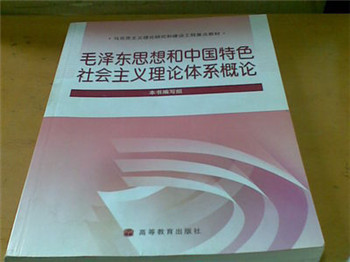
中国高校正在大范围扩展面向外国学生的网络课程,希望在全世界推广中华文化和价值观。清华大学今年秋天开设的《毛泽东思想概论》,便是早期尝试之一。这是大陆高校在edX网站上开设的45门课程中的一门,吸引了3100多名学生。EdX网站是哈佛大学和麻省理工学院联合推出的一个平台。
Chinese universities are vastly expanding online courses aimed at foreign students, hoping to promote Chinese culture and values around the world. One of the first attempts, “Introduction to Mao Zedong Thought,” offered this fall by Tsinghua University, drew more than 3,100 students. The course is one of 45 classes offered by mainland Chinese universities on edX, a joint venture by Harvard and the Massachusetts Institute of Technology.
这门课程研究的,是1949年建立中华人民共和国的共产党领袖毛泽东的理论和政策。相关课程是中国所有高校的必修课,但却广为学生厌恶,被认为是枯燥的政治灌输,脱离了中国的现代生活。赶快尝试下面的小测验,来测测你对毛泽东思想的了解程度吧。
The course studies the theories and policies of Mao Zedong, the Communist leader who founded the People’s Republic of China in 1949. A version of the course is a requirement in all Chinese universities and is widely loathed by students as boring political indoctrination that is irrelevant to life in modern China. Test your knowledge of the chairman’s philosophy by taking the quiz below.
1 中国革命的基本动力是:
1 The basic motive force for the Chinese revolution is:
无产阶级
The proletariat
农民
The peasantry
城市小资产阶级
Urban petty bourgeoisie
民族资产阶级
National bourgeoisie
2 中国进入社会主义社会后面临的主要矛盾是:
2 The basic conflict that faced China after its entry into a socialist society is:
无产阶级同资产阶级、社会主义道路同资本主义道路之间的矛盾
The conflict between the proletariat and the bourgeoisie, between the socialist path and the capitalist path.
生产关系同生产力、上层建筑同经济基础之间的矛盾
The conflict between the relations of production and productive forces, between superstructure and economic foundation.
人民日益增长的物质文化需求同落后的社会生产之间的矛盾
The conflict between people’s growing materialistic and cultural needs and the backward social production.
先进的社会主义制度同落后的社会生产力之间的矛盾
The conflict between advanced socialist institutions and backward social productive forces.
3 近代中国社会的诸多矛盾中,最重要的是:
3 Of the many conflicts in modern Chinese society, the most important one is:
帝国主义和中华民族之间的矛盾
The conflict between imperialism and the Chinese nation
封建主义和人民大众之间的矛盾
The conflict between feudalism and the masses
资产阶级和无产阶级之间的矛盾
The conflict between the bourgeoisie and the proletariat
反动统治阶级内部的矛盾
The internal conflict among the reactionary ruling class
4 毛泽东指出,认清所有革命问题的根据是:
4 Mao Zedong pointed out that the basis for identifying all revolutionary problems is:
正确分析中国社会的阶级形势
Correctly analyzing the class situation in the Chinese society
正确分析中国社会的经济结构
Correctly analyzing the economic structure of the Chinese society
认清中国社会的本质
Identifying the nature of the Chinese society
认清中国社会的主要矛盾
Identifying the major conflict of the Chinese society
5 下列国家中不是社会主义国家的是
5 Which of the following countries is not a socialist country?
中国
China
蒙古
Mongolia
老挝
Laos
越南
Vietnam
6 毛泽东思想活的灵魂包括三个方面,下列选项中不包括在内的是
6 The living soul of Mao Zedong Thought includes three main aspects. Which one is not included?
实事求是
Seeking truth from facts
独立自主
Independence and self-reliance
群众路线
The mass line
武装斗争
Armed struggle
7 要想正确看待毛泽东思想的历史地位,需要科学评价毛泽东和毛泽东思想。下列对毛泽东和毛泽东思想的评价,哪个是不正确的?
7 To obtain a correct view of the historical status of Mao Zedong Thought involves a scientific judgment of Mao Zedong and Mao Zedong Thought. Which of the following judgments of Mao Zedong and Mao Zedong Thought is incorrect?
毛泽东把自己的一生奉献给了党和人民的事业,但也在晚年犯了严重的错误。
Mao Zedong devoted his entire life to the cause of the party and the people, but he also made severe mistakes in his later years.
凡是毛主席生前做出的决策都要坚决维护,凡是毛主席的指示都要始终不渝地遵循。
All of Mao Zedong’s decisions and orders must be firmly upheld and always obeyed.
在晚年,特别是在“文化大革命”期间,毛泽东犯了严重的错误。但是就他的一生来看,他对中国革命的功绩远远大于他的过失。
In his later years, and especially during the “Cultural Revolution,” Mao Zedong made serious mistakes. But when his activities were judged as a whole, his contributions to the Chinese revolution far outweighed his faults.
毛泽东的功绩是第一位的,错误是第二位的。
Mao Zedong’s merits were more important than his mistakes.
8 在“论十大关系”的讲话中,毛泽东说:“我们同农民的关系历来都是好的,但是在粮食问题上曾经犯过一个错误。”毛泽东说这番话时谈到的关系是:
8 In “On the Ten Major Relationships,” Mao Zedong said: “Our relationship with peasants has always been good, but we made a mistake in the food issue.” Which relationship was he talking about when he gave this remark:
重工业和轻工业、农业的关系
The relationship between heavy industry and light industry, agriculture
国家、生产单位和生产者个人的关系
The relationship between the state, the unit of production and the producers
经济建设和国防建设的关系
The relationship between economic construction and national defense
中央和地方的关系
The relationship between the central and the local authorities